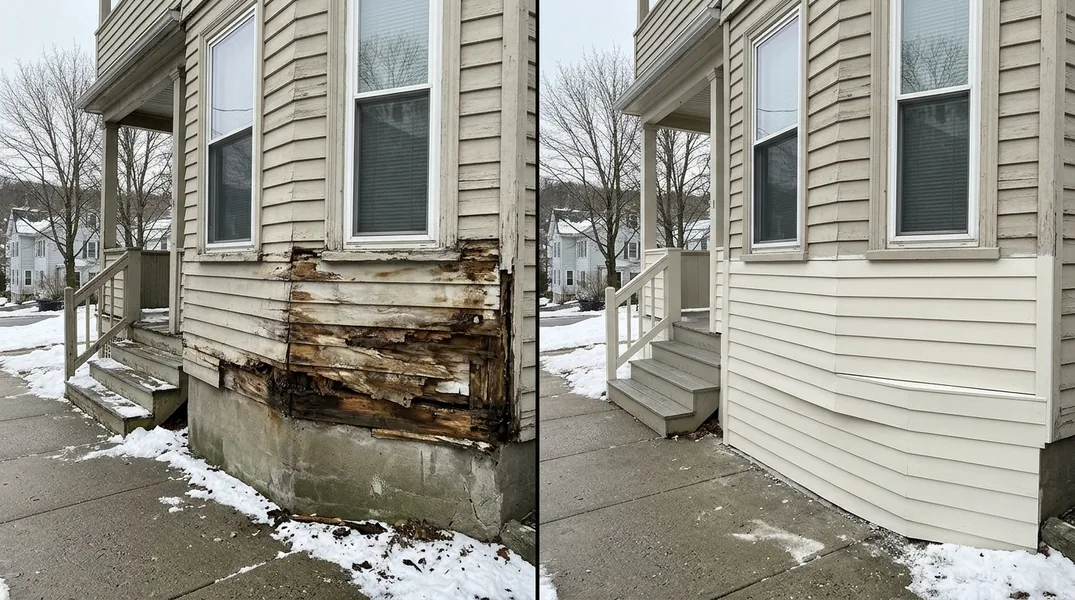
Why Worcester's Climate Creates the Perfect Storm for Wood Rot
Worcester homeowners face a unique challenge when winter arrives. The region's freeze-thaw cycles, combined with heavy snowfall and unpredictable temperature swings, create ideal conditions for ice dam formation and the wood rot that follows. Unlike areas with consistently cold winters or mild climates, central Massachusetts experiences dramatic temperature fluctuations that accelerate moisture damage to your home's structure.
When snow melts on your roof during a warmer day, water runs down toward the eaves. If temperatures drop again at night, that water refreezes at the edge of your roof, forming an ice dam. This dam traps additional meltwater behind it, forcing moisture up under your shingles and into the fascia, soffit, and roof decking. Over time, this repeated cycle of freezing and thawing pushes water deeper into the wood, where it creates the perfect breeding ground for rot-causing fungi and decay.
The problem is compounded by the fact that many homes in Worcester were built decades ago with materials and construction methods that are particularly vulnerable to moisture intrusion. Older homes often lack modern ice and water barriers, and their fascia boards, soffits, and roof overhangs are prime targets for damage.
How Ice Dams Lead to Fascia Rot and Structural Damage
Your home's fascia is the horizontal board that runs along the edge of your roof, and it bears the brunt of ice dam damage. When ice dams form, they trap water that should drain freely away from your home. This water seeps into the fascia board, the soffit, and the underlying roof structure. Unlike acute damage from a storm or fallen tree, ice dam damage is insidious because it happens slowly and often goes unnoticed until the rot is well advanced.
Fascia rot is particularly dangerous because the fascia serves a structural purpose. It supports the lower edge of your roof and the gutters that protect your entire home. When the fascia begins to decay, it weakens, and the weight of ice, snow, and water can cause gutters to sag or pull away from the house. This allows even more water to penetrate behind the fascia and into the walls and attic space. Many homeowners don't realize they have fascia rot until they notice peeling paint, soft spots in the wood, or water stains on their ceiling.
The damage extends beyond just the fascia. Once water gets behind the fascia, it can rot the roof decking, the ends of the roof trusses, and even the top plates of your exterior walls. In severe cases, this structural damage can compromise the integrity of your entire roof system, making Wood Rot & Dry Rot Repair not just a cosmetic concern but a serious safety issue.
The Hidden Danger: Dry Rot That Spreads After Winter
Many homeowners assume that wood rot only occurs in areas that stay wet. In reality, dry rot is often the most destructive consequence of ice dam damage. After water from melting snow and ice penetrates your fascia and roof structure, it eventually dries out. However, the damage doesn't end when the wood dries. Dry rot fungi have already colonized the wood, and they continue to spread and consume the cellulose that gives wood its strength.
Dry rot is particularly insidious because it can spread rapidly through wood, traveling along grain lines and through structural members. A small area of water damage in spring can become extensive dry rot by fall if left untreated. The fungi can spread to adjacent wood members, compromising beams, joists, and wall framing that may not have been directly exposed to water. This is why dry rot repair in Worcester, MA often requires more extensive work than homeowners initially expect.
The challenge is that dry rot can progress silently. You might not notice any signs of a problem until the structural damage is severe. By then, the cost of repairs increases dramatically because more wood needs to be replaced, and the repair work becomes more complex. This is why early detection and prompt action are essential for protecting your home's structural integrity.
Signs Your Home Has Ice Dam and Snowmelt Damage
Knowing what to look for can help you catch ice dam damage before it becomes a major problem. The most obvious sign is the presence of ice dams themselves. If you notice thick ridges of ice forming along the edge of your roof during winter, you have an ice dam problem. Other visible signs include water stains on your ceiling or walls, peeling paint on your fascia or soffit, and sagging gutters. You might also notice mold or mildew growth in your attic or along the underside of your roof decking.
More subtle signs include soft or spongy spots when you press on the fascia, visible gaps or separation between the fascia and the roof, and a musty smell in your attic. If you notice any of these warning signs, don't wait until spring to address the problem. The longer moisture remains in the wood, the more extensive the damage becomes. Many homeowners find that what started as a small area of rot has spread significantly by the time they call for professional help.
If you're unsure whether your home has damage, it's worth having a professional inspection. Worcester Carpentry can assess your roof, fascia, and attic to identify any water damage or rot, even in early stages. Call us at (978) 440-1508 to schedule a free estimate and get peace of mind about your home's condition.
Prevention Strategies for Worcester Homeowners
The best approach to ice dam and snowmelt damage is prevention. Start by ensuring your attic is properly ventilated and insulated. A well-insulated attic stays cold during winter, which reduces the temperature difference between the roof surface and the air. This difference is what causes snow to melt and refreeze at the eaves. Proper ventilation also allows any moisture that does get into the attic to escape before it causes damage.
Next, keep your gutters clean and clear of debris. Clogged gutters prevent water from draining away from your home, and they contribute to ice dam formation. Make sure your gutters are securely attached to your fascia and that they slope slightly toward the downspouts. Consider installing gutter guards to minimize debris accumulation, especially if you have trees overhanging your roof.
You should also inspect your roof shingles and flashing regularly. Damaged shingles and deteriorated flashing allow water to penetrate your roof structure. If you notice curling, missing, or damaged shingles, have them replaced promptly. Some homeowners also benefit from installing ice and water barriers along the eaves, which provide an extra layer of protection against water intrusion.
Finally, trim tree branches that hang over your roof. Overhanging branches collect snow and block sunlight, which contributes to ice dam formation. They also drop leaves and debris into your gutters. If you live in an area prone to heavy snow, consider having your roof raked or professionally cleared after major snowstorms to reduce the weight and the likelihood of ice dams forming.
Wood Rot & Dry Rot Repair Near Me: When to Call a Professional
If you suspect your home has ice dam damage or wood rot, it's time to call a professional. While some homeowners attempt DIY repairs, wood rot is a structural issue that requires expertise. Improper repairs can leave hidden rot behind, which continues to spread and weaken your home's structure. A professional carpenter can identify the full extent of the damage, remove all affected wood, treat the area to prevent future rot, and install new wood that will last for decades.
Worcester Carpentry specializes in wood rot repair in Worcester and has the experience to handle everything from minor fascia rot to extensive structural damage. Our team uses proven techniques to remove damaged wood, eliminate moisture sources, and install durable replacements. We also address the underlying cause of the damage, whether that's poor ventilation, inadequate flashing, or ice dam formation, to prevent the problem from recurring.
The sooner you address wood rot, the less expensive the repair will be and the better you protect your home's structural integrity. Don't wait until spring or summer when the damage has spread. Contact Worcester Carpentry today at (978) 440-1508 or visit our website to request a free estimate. We'll assess your home's condition and provide a clear explanation of what needs to be done.
Looking for a professional carpentry contractor in Worcester? Worcester Carpentry responds fast for all your carpentry needs.
Get a Free QuoteOur services: Wood Rot & Dry Rot Repair · Termite Damage Repair · Floor Joist & Subfloor Repair