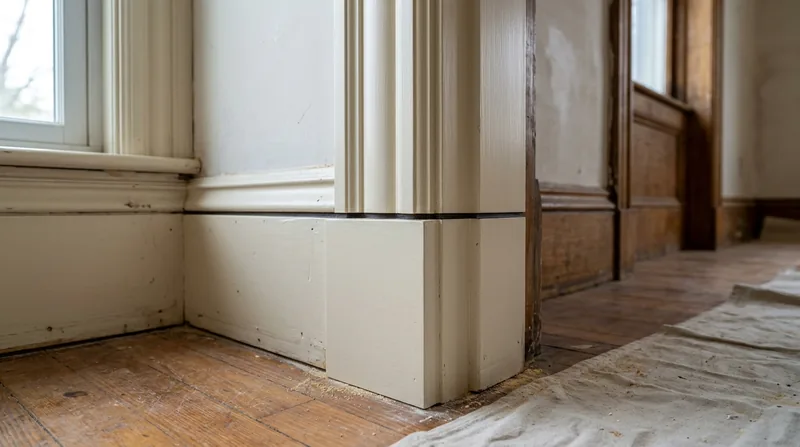




Finish & Trim Carpentry in Worcester is the detail work that separates a well-built home from one that merely stands. From the tight miters on casing in a Grafton Hill Victorian to the scribed baseboards wrapping a triple-decker parlor, the carpentry that frames your windows, doors, and walls defines how a room feels. Worcester's steep residential neighborhoods, built mostly between 1890 and 1960, hold thousands of homes where original trim has aged, settled, or been damaged by the freeze-thaw cycles and moisture swings that define a New England winter. We install and repair casing, paneling, wainscoting, and custom trim throughout Worcester, Grafton, Sutton, Webster, and West Boylston, using lead-safe practices on all pre-1978 work. Whether your project is a small update to a Cape in Tatnuck or a full interior renovation in Elm Park, the difference between a handyman and a finish carpenter shows in every joint.
Why Finish & Trim Carpentry Matters in Worcester's Historic Homes
Worcester's residential character is built on wood frame construction, much of it nearly 150 years old. Trim and casing are not mere decoration. They cover framing transitions, protect walls and door jambs from damage, and in older homes, they are often the only finish layer between raw stud framing and the living space. Moisture, settling, and the movement that comes with age mean that original trim splits, separates from the wall, or fails to close properly. New construction in the suburbs around Shrewsbury and Holden demands tight reveals and professional joinery. Either way, a finish carpenter who understands how wood moves and how to fit pieces correctly will deliver work that lasts.
- We scribe and fit trim to uneven walls and floors, a skill that prevents gaps and ensures tight joints.
- We install casing on interior doors and windows so that reveals are even and miters are tight.
- We hang wainscoting and paneling with proper fastening and finish so the work reads as intentional, not patched.
- We work lead-safe on all trim removal and reinstallation in homes built before 1978, following EPA guidelines for dust control and disposal.
These details matter because poor trim work becomes obvious the moment light hits it, and it costs far more to repair or replace than to do it right the first time.
Local example: A 1910 Queen Anne in Crown Hill had original plaster walls and wood casing that had separated from the jambs after a century of settling. Rather than replace, we re-hung the casing with modern fasteners, scribed it to follow the existing wall profile, and sealed it so the trim would move with the house instead of cracking again.
For guidance on what trim work may require a permit in Worcester, check with the Worcester Inspectional Services Department, as regulations vary by scope and structure type.
How We Approach Finish Carpentry in Worcester Homes
Every finish carpentry job starts with understanding the existing structure and the movement that has already occurred. We measure carefully, identify where walls are plumb and where they have settled, and then plan cuts and fits that will look intentional and stay tight. We work with species appropriate to the home's era, respect lead-safe practices on older homes, and finish every joint with precision.
- We visit the site and document the existing condition, wall plumb, floor level, and any damage to existing trim or casing.
- We measure and cut all pieces on-site or in the shop, accounting for the actual wall and jamb profiles rather than assuming standard dimensions.
- We install fasteners that hold trim securely without splitting the wood, using screws or finish nails as the situation demands.
- We sand, fill, and finish trim so that joints are invisible and the work reads as a seamless part of the home.
- We clean and protect finished surfaces, leaving the space ready for paint or stain.
This process takes longer than a handyman approach, but it is the only way to achieve the fit and finish that Worcester's older homes deserve. For projects that involve interior door installation or custom trim around existing openings, see our interior door installation service.
Real example: A 1920s colonial in Webster Square needed new baseboard and casing after the original wood had split along the grain. We removed the old trim carefully, patched the plaster, and installed new baseboard scribed to the uneven floor and wall intersection. The new casing on the parlor doors was milled to match the existing profile, and every joint was coped and sanded so the eye cannot find a seam.
Finish Carpentry Methods and Materials
| Approach | Description | Best for |
|---|---|---|
| Scribing and fitting | Cutting trim to follow the exact profile of an uneven wall, floor, or ceiling so that gaps are eliminated. | Older homes with settled walls, uneven floors, or out-of-plumb framing. |
| Coped joints | Cutting one piece of trim to fit over the profile of another so that joints remain tight even as wood moves with seasonal humidity. | Interior corners, crown molding, and baseboard where two pieces meet at an angle. |
| Miter joints | Cutting both pieces at 45 degrees so they meet at a corner with grain running continuously across the joint. | Exterior trim, door and window casing where a finished edge is visible on both sides. |
| Lead-safe removal and reinstallation | Carefully removing old trim without disturbing lead paint, containing dust, and reinstalling or replacing trim with modern fasteners. | Any trim work in homes built before 1978 in Worcester, Grafton, Sutton, Webster, and West Boylston. |
| Custom paneling and wainscoting | Milling and installing board-and-batten, shiplap, or frame-and-panel wainscoting to create a finished look on walls. | Historic restoration, period-appropriate updates, and contemporary finishes in any Worcester-area home. |
Each method demands different tools, experience, and patience. A finish carpenter who knows when to scribe, when to cope, and when to miter will deliver work that looks intentional and stands the test of time.
Finish & Trim Carpentry Cost in Worcester: What to Expect
The cost of finish carpentry depends on the scope of the work, the complexity of the fit, and the materials chosen. A simple casing installation on a new door opening in a modern colonial will cost less than scribing and fitting wainscoting to the uneven walls of a 1910 Victorian. Labor is the primary driver, because precision takes time. Material costs vary by species and finish, but are typically secondary to the labor component.
Finish carpentry projects in Worcester typically start at $550 for a small job such as casing a single door or window, and scale upward based on linear feet of trim, complexity of joints, and the condition of the existing surfaces. A full-room wainscoting installation, crown molding around multiple rooms, or a custom trim package can easily exceed $3,000 to $5,000 or more. The best way to understand your project cost is to get a free estimate from us and compare it with one or two other local carpenters so you understand the market and the reasoning behind the price.
See our full pricing guide for more detail on what affects cost and how we structure our estimates.
Finish & Trim Carpentry Near Me: What to Look for When Hiring a Contractor in Worcester
Finding the right finish carpenter is about more than just price. You need someone who understands wood movement, who takes pride in tight joints, and who will explain why a particular approach makes sense for your home. In Worcester and the surrounding towns, many homeowners are working with homes that are 50, 100, or even 150 years old. A carpenter who understands that context will deliver better results than one who treats every job the same.
- Confirm that the contractor is fully insured and can provide a certificate of insurance before work begins.
- Ask for references from recent jobs, particularly in homes of similar age and construction to yours.
- Get at least two estimates so you can compare scope, materials, timeline, and price.
- Understand whether your project requires a permit from the Worcester Inspectional Services Department, and confirm the contractor will obtain it if needed.
- Check that the contractor has experience with lead-safe practices if your home was built before 1978.
- Ask how the contractor will protect your floors and existing finishes during the work.
A good finish carpenter will spend time on-site understanding your space, ask questions about how you will use the room, and explain their approach before they cut the first piece. If you are ready to discuss your project, contact us for a free estimate. We respond within 24 hours and will walk through the work with you in detail.
Finish & Trim Carpentry in Worcester: Pricing Guide
| Service | Price | Details |
|---|---|---|
| Single door or window casing | Starting at $550 | Includes removal of old casing if needed, new casing installed with tight miters, sanded and ready for paint or stain |
| Baseboard installation, per room | Starting at $800 | Includes removal of old baseboard, scribing to uneven floors, new baseboard fastened and finished, linear feet and complexity determine final cost |
| Crown molding, full room | Starting at $1,200 | Includes coped interior corners, mitered exterior corners, fastened to wall framing, sanded and ready for finish, price scales with room perimeter |
| Wainscoting or custom paneling | Starting at $1,500 | Includes layout, milling, installation, and finish, price depends on square footage, material choice, and wall condition |
| Complex or multi-room projects | On estimate | Full-home trim packages, custom built-ins, or extensive lead-safe work require on-site assessment before pricing |
| Estimate and site visit | Free | No obligation, response within 24 hours at (978) 440-1508, includes detailed written estimate with materials and timeline |
Indicative pricing, the exact cost depends on square footage, finish, and site access. Free personalized estimate within 24h at (978) 440-1508.


