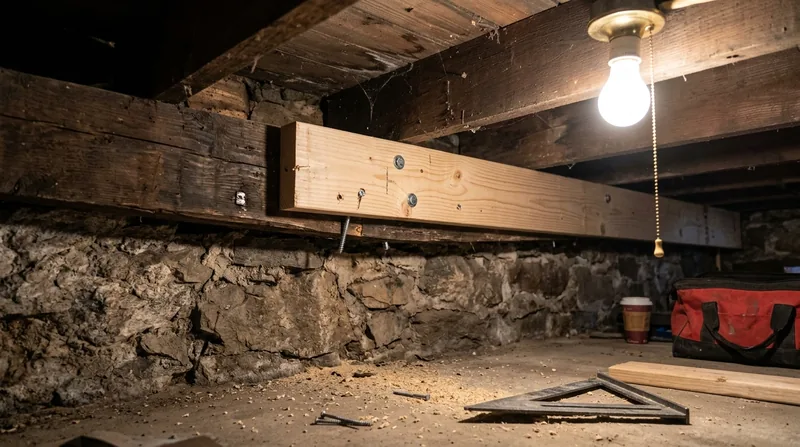




Floor Joist & Subfloor Repair in Worcester is one of the most common structural carpentry jobs we handle, and for good reason. Worcester sits at 500 to 1,000 feet in the central Massachusetts hills, where the climate cycles through heavy freeze-thaw winters, humid summers, and nor'easters that drive water into basements and crawlspaces. Most of the city's housing stock was built between 1890 and 1960: triple-deckers stacked with three kitchens and bathrooms on Grafton Hill and Vernon Hill, Victorians along the West Side, and colonials in Tatnuck and Burncoat. That old wood, combined with damp basements and a century of settling, produces bouncy or sloping floors that signal tired joists below. We reinforce weak joists, replace rotted sections, and level floors before finishes go back down, restoring both safety and usability to homes across Worcester, Grafton, Webster, and the surrounding towns.
Why Floor Joist & Subfloor Repair Matters in Worcester's Aging Housing Stock
Worcester's triple-deckers and Victorian homes were engineered for the loads of their time, but a century of moisture, settling, and accumulated wear takes a real toll on the wood framing that carries your floor. Basements in older homes collect water from ice dams, snowmelt, and leaking sills. That moisture feeds wood rot, carpenter ants, and the slow degradation of joists and rim boards. A soft spot in your floor is not just a comfort problem; it signals that the structural members below are losing density and load-bearing capacity. Left unaddressed, the problem spreads, the sag deepens, and repair costs climb. Catching it early and reinforcing or replacing the affected joists is the most cost-effective path forward.
- Damp basements in Worcester homes allow wood rot to progress silently in rim joists and sill plates for years before a soft floor reveals the damage.
- Carpenter ants tunnel through weakened joists, creating voids that reduce bearing capacity and accelerate structural failure.
- Triple-decker framing was never designed to carry modern HVAC equipment, plumbing, and storage loads stacked across three units.
- Freeze-thaw cycles in central Massachusetts split and crack old lumber, and ice dams drive water into rim board cavities where it sits and rots.
- Sistering new lumber alongside tired joists restores strength without the cost and disruption of full replacement when the wood core is still sound.
Addressing joist and subfloor damage promptly protects the long-term value of your home and prevents costly cascading repairs to floors, walls, and foundations.
Key info: Worcester building inspectors commonly flag bouncy floors and soft spots during home inspections and mortgage appraisals. Early repair prevents inspection failures, appraisal holds, and insurance complications. Contact the Worcester Building Department at (508) 799-8181 if you have questions about permit requirements for structural joist work.
How Worcester Carpentry Repairs Floor Joists & Subfloors: Our Process
We start every job with a thorough basement inspection to identify the scope of rot, insect damage, and structural weakness. We probe joists with a screwdriver and moisture meter, take photographs, and map out which members are salvageable and which need replacement. From there, we build temporary support to hold the floor stable, remove the damaged section or sister new lumber alongside the weak member, and rebuild subfloor where necessary. The goal is to restore level, solid bearing before finishes go back down. We also address the moisture source: leaky sills, failed sill gaskets, and inadequate basement drainage all need attention so the repair doesn't fail again in five years. Related work like wood rot and dry rot repair often runs parallel to joist work, especially in triple-deckers where water damage spreads across multiple floors.
- We inspect the entire joist bay and rim board to map the full extent of rot and insect damage before we plan the repair.
- We install temporary support posts and beams to carry the floor load safely while we work on the joists below.
- We cut out rotted sections of joist or subfloor and sister new pressure-treated or dimensional lumber, fastening with structural bolts and fasteners.
- We replace subfloor sheathing in sections, using plywood or OSB sized and fastened to code for the span and load.
- We level the floor using shims and fasteners, checking with a transit or laser level to ensure the finished surface is flat.
- We seal rim board edges and sill plates with sealant and ensure basement drainage and ventilation are working to prevent future moisture accumulation.
The entire process typically takes two to five days depending on the scope, and we work to minimize disruption to the rest of your home.
Local example: A 1920s colonial in Tatnuck had a soft spot in the master bedroom floor above a basement where the sill plate had rotted from ice dam water and the two outer joists had lost half their depth to rot and carpenter ants. We sistered new joists alongside the weak members, replaced the sill plate and rim board, and leveled the floor. The repair took three days and cost less than half the price of replacing all four joists outright.
Floor Joist & Subfloor Repair Methods: When to Reinforce vs. Replace
| Approach | Description | Best for |
|---|---|---|
| Sistering | New joist bolted alongside the weak member, sharing load and restoring stiffness without full removal. | Joists with surface rot or partial loss where the core is still sound; repairs that preserve existing structure. |
| Partial Replacement | Rotted end section of joist cut out and replaced with new lumber, fastened to the remaining sound wood. | Rot localized to rim areas or bearing ends; allows cost savings when the joist body is solid. |
| Full Joist Replacement | Entire joist removed and new member installed; temporary support carries the load during work. | Extensive rot, multiple members compromised, or damage that spans more than half the joist depth. |
| Subfloor Sheathing Replacement | Rotted or soft subfloor plywood removed and replaced with new sheathing, fastened to solid joists below. | Damage limited to the top layer; joists are sound and can support new fastening. |
We always prefer repair and reinforcement when the wood structure justifies it. Replacement is honest and necessary when rot is deep, widespread, or has compromised more than 30 percent of a joist's cross-section. A site inspection tells us which path makes sense for your floor.
Floor Joist & Subfloor Repair Cost in Worcester: What to Expect
Floor joist and subfloor repair in Worcester typically starts at $1,800 for a localized repair affecting one or two joists and a small subfloor section. That ballpark covers temporary support, removal of the damaged wood, new lumber and fasteners, and leveling. Costs rise with the scope: if four or more joists are involved, if the damage spans the full length of a bay, or if the subfloor sheathing is extensive, expect $3,500 to $6,000 or more. Access matters too. A basement joist is easier to reach than one buried under a finished floor, and finished floor removal and reinstallation add labor. The age and species of the existing framing also factor in; old-growth Douglas fir or hemlock may be salvageable with sistering, while modern lumber often needs full replacement. We always recommend getting two or three estimates so you can compare scope, method, and price across contractors. Our estimate is free, and we respond within 24 hours at (978) 440-1508. For a complete overview of our pricing across all carpentry services, visit our pricing page.
Several factors move the final cost up or down. Moisture remediation and sill plate replacement add $800 to $1,500. If the joists rest on a failed sill and we need to install a new sill plate as well, that's additional structural work. Temporary support beams and posts are necessary on most jobs and are included in the labor estimate. If the floor is finished and needs to come up and go back down, that's extra. On jobs larger than $5,000, we often recommend a structural engineer review, especially if load-bearing walls or beam modifications are involved; that consultation typically costs $300 to $600 and is worth the confidence it brings. We can help document the damage for insurance claims, though we cannot guarantee coverage or promise that a deductible will be waived.
Floor Joist & Subfloor Repair Near Me: What to Look for When Hiring a Carpenter in Worcester
Hiring the right contractor for structural carpentry is critical. Look for a carpenter or carpentry shop that has been in business for at least five years, carries liability and workers' compensation insurance, and can provide references from recent joist and subfloor jobs. Ask to see photos of similar work and talk to past customers about the quality of the finished floor and whether the repair has held up. Fully insured status is non-negotiable; confirm that the contractor carries both general liability and workers' compensation before work begins. Many joist repairs benefit from a structural engineer's review, especially if the job involves load-bearing walls or if the damage is extensive; ask your contractor whether an engineer's assessment makes sense for your scope. Some Worcester neighborhoods and older home associations have design review boards; check whether your property requires approval before structural work starts. Get written estimates from at least two contractors, and make sure each estimate clearly spells out what's included: temporary support, joist method (sistering vs. replacement), subfloor scope, moisture remediation, and any finishing work. The lowest price is not always the best value if it means cutting corners on temporary support or moisture control. For a free estimate and a conversation about your floor, contact Worcester Carpentry today.
- Verify that the contractor is fully insured and can provide a certificate of insurance covering both liability and workers' compensation.
- Ask for references from joist and subfloor repairs completed in the past two years, and follow up with at least two customers.
- Request a written scope of work that spells out the repair method, materials, temporary support plan, and any moisture remediation included.
- Confirm whether a structural engineer's review is recommended for your job and understand the cost and timeline for that assessment.
- Check with the Worcester Building Department or your local permit office about whether your repair requires a permit and what inspections will be needed.
- Ask about the contractor's warranty on the repair and what follow-up visits or adjustments are included in the price.
A reputable local contractor will answer these questions clearly and will never pressure you to decide on the spot. Take your time, compare estimates, and choose a shop that explains the work and stands behind it.
Floor Joist & Subfloor Repair in Worcester: Pricing Guide
| Service | Price | Details |
|---|---|---|
| Single joist sistering or partial repair | Starting at $1,800 | Reinforcement of one weak joist with new lumber, temporary support, and subfloor leveling included. |
| Multiple joists and subfloor section | Starting at $3,500 | Two to four joists repaired or replaced, subfloor sheathing replaced, and moisture remediation at the sill. |
| Extensive joist replacement and sill plate work | Starting at $5,500 | Four or more joists, full sill plate replacement, basement drainage assessment, and finished floor removal and reinstall. |
| Structural engineer review | On estimate | Recommended for large or load-bearing repairs; typically $300 to $600, paid separately to the engineer. |
| Travel and estimate | Free | No charge for travel within Worcester and surrounding towns; free written estimate with 24-hour response time. |
Indicative pricing, the exact cost depends on square footage, finish, and site access. Free personalized estimate within 24h at (978) 440-1508.


