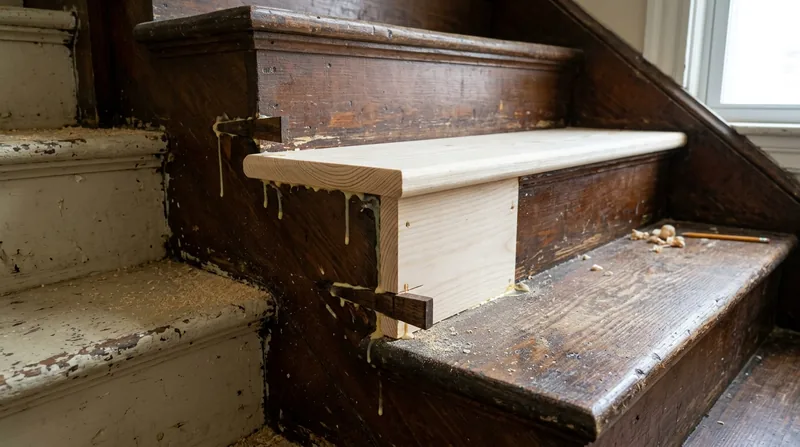




Stairs and railings take a beating in Worcester homes. Whether it's the steep common stairs climbing three stories on a triple-decker in Vernon Hill, the grand flights of a Crown Hill Victorian, or a modern colonial in Shrewsbury, stair and railing repair is one of those jobs that can't be ignored once squeaking, wobbling, or wear sets in. The freeze-thaw cycles and seasonal moisture swings of central Massachusetts age wood fast, and a loose baluster or worn stringer isn't just annoying, it's a safety issue. We fix squeaky treads, tighten banisters, replace damaged stringers, and restore period railings so your stairs are solid, safe, and comfortable to use.
Why Stair and Railing Repair Matters in Worcester's Historic Homes
Worcester's housing stock is old. Most of the city's homes were built between 1870 and 1950, and those stairs have been carrying weight, flexing with seasonal changes, and weathering decades of use. The triple-deckers that line the hills of Grafton Hill and Union Hill feature steep, narrow stairs that see constant foot traffic. Victorian homes on Crown Hill and the West Side often have elaborate period railings and wide main flights that require specialized attention. Modern colonials and capes in Tatnuck and Burncoat have their own issues: nails work loose, treads cup and split, and handrails lose their grip over time. Moisture from Worcester's humid summers and ice-dam-driven winter snowmelt can rot stringers from underneath, and carpenter ants find their way into stair framing just as they do into other wood structures.
- Loose balusters and newel posts create a safety hazard and a wobbling feeling underfoot.
- Squeaky treads signal movement in the stringer and fasteners and worsen with age.
- Worn or rotted stringers, the angled boards that support the treads, need replacement to restore structural integrity.
- Period railings on Victorians and older colonials require careful restoration to preserve character and function.
- Handrails that have lost their finish or developed cracks should be refinished or replaced for comfort and safety.
A stair that feels solid and moves without noise tells you the fasteners are tight, the wood is sound, and the handrail is safe to grip.
Local example: A 1920s triple-decker in Vernon Hill with three flights of common stairs to the upper apartments often sees the middle and lower flights squeaking and balusters working loose from years of foot traffic. The stringers may show soft spots from ice-dam water seeping in at the exterior wall where the stairs meet the building. We tighten fasteners, replace damaged balusters, and sister in new wood where the stringer has lost its strength.
For guidance on whether a repair requires a building permit in Worcester, check with the Worcester Department of Inspectional Services. Alterations to stairs and railings may trigger permit requirements depending on scope, and it's worth confirming before work begins.
How We Repair Stairs and Railings: Our Process in Worcester
We start by walking the stairs and testing each component. A loose baluster gets tightened at its fastening points, top and bottom. A squeaky tread tells us the stringer fasteners need resetting or the tread itself needs shimming and re-fastening. A rotted stringer gets assessed for how much wood is sound, and if repair is possible, we sister in new wood alongside the damaged section. If the rot runs too deep, we replace the stringer. Period railings on Victorians and older homes get the same careful diagnosis: we preserve what's original and sound, repair what's damaged, and replace only what must go.
- We inspect the entire stair assembly, checking balusters, newel posts, treads, risers, and stringers for movement and damage.
- We tighten all fasteners, including screws and bolts connecting balusters to the handrail and stringers to the treads.
- We identify and replace individual balusters that are cracked, split, or rotted, matching the profile and finish of the originals.
- We repair or replace damaged treads, ensuring they are level, securely fastened, and comfortable underfoot.
- We assess stringers for rot and soft spots, sistering new wood where the damage is localized or replacing the entire stringer if necessary.
- We refinish or replace handrails to ensure a solid, comfortable grip and a finished appearance that matches the home's style.
The goal is a stair that is safe, quiet, and looks right for your home's age and character.
Example from Grafton: A 1910 colonial in Grafton with a grand front staircase had loose balusters and a handrail that had lost its finish. We tightened all baluster fasteners, refinished the handrail, and replaced two balusters that had developed cracks from age and drying. The staircase now feels solid and looks period-correct.
If your stairs show signs of rot or structural damage, we can help you document the condition for insurance purposes. See our wood rot repair page for more on how we assess and repair rot in structural wood.
Stair and Railing Repair Methods and Approaches
Different stairs need different fixes. A squeaky tread in a 1960s ranch is a fastening issue. A loose baluster on a Victorian is often a matter of tightening screws or replacing a worn baluster. A rotted stringer in a triple-decker requires structural repair or replacement. We match the method to the problem and the age of the home.
| Approach | Description | Best for |
|---|---|---|
| Tightening and fastener reset | Removing and resetting screws, bolts, and fasteners to eliminate movement and squeaking. | Loose balusters, squeaky treads, and handrails that wobble slightly. |
| Baluster replacement | Removing a cracked or rotted baluster and installing a new one to match the original profile and finish. | Individual balusters that are split, rotted, or damaged beyond tightening. |
| Stringer sistering and repair | Installing new wood alongside a damaged stringer to restore strength where rot or damage is localized. | Stringers with soft spots or rot in one section that are otherwise sound. |
| Stringer replacement | Removing and replacing an entire stringer when rot or damage is extensive and the wood cannot be reliably repaired. | Stringers with widespread rot, severe damage, or structural failure affecting multiple treads. |
| Handrail restoration and finishing | Sanding, refinishing, or replacing handrails to restore finish, comfort, and appearance. | Handrails that have lost their finish, developed cracks, or need to be stained or sealed. |
| Period railing restoration | Carefully preserving and repairing original railings on Victorian and older homes while maintaining historical character. | Historic railings on Crown Hill Victorians and older colonials where originality and period detail matter. |
Stair and Railing Repair Cost in Worcester: What to Expect
The cost of stair and railing repair depends on what's broken and how much work is needed. A simple tightening and fastener reset on a few loose balusters may run from $600 to $900. Replacing a single baluster or refinishing a handrail typically falls in the $800 to $1,500 range. Sistering a damaged stringer section can run $1,500 to $3,000 depending on the extent of the rot and the length of the repair. Replacing an entire stringer is a bigger job and usually requires an on-site estimate, as the cost depends on the stringer's length, the stair's configuration, and access.
Several factors move the price up or down. A three-story triple-decker staircase costs more than a single-flight stair in a ranch. A Victorian railing with ornate balusters and period details takes longer to repair or match than a simple modern railing. Extensive rot in a stringer, requiring structural repair or replacement, costs more than a squeaky tread. Access also matters: if the staircase is interior and easy to work around, the job moves faster. If it's a tight space or the stairs are the only route in and out during the repair, coordination takes longer.
We recommend getting 2 to 3 estimates from local carpenters so you can compare approach and price. See our pricing page for more detail on what drives cost and how we structure estimates.
Stair and Railing Repair Near Me: What Worcester Homeowners Should Know When Hiring a Carpenter
Hiring the right carpenter for stair and railing work means checking a few things. Make sure the contractor is fully insured and can provide proof of coverage. Ask for references from recent stair or railing jobs in Worcester or nearby towns like Grafton, Webster, or West Boylston. A good contractor will walk your stairs with you, explain what's wrong, and give you a clear written estimate that breaks down labor, materials, and timeline. If your home is a historic property or sits in a historic district, check whether your city or HOA has guidelines for stair or railing work. Worcester's Crown Hill and Elm Park areas, for example, may have design review requirements for visible exterior railings.
Ask your carpenter whether the work will require a building permit. Alterations to stairs and railings can trigger permit requirements in Worcester, and your contractor should be familiar with local rules. If you have any uncertainty, contact the Worcester Department of Inspectional Services to confirm before work starts. Get the estimate in writing, confirm the timeline, and ask about warranty or guarantees on fasteners and finishes. A carpenter who has been in business since 2016, like Worcester Carpentry, can show you the depth of experience with older homes and period work that Worcester's housing stock demands.
Ready to get your stairs solid and safe again? Contact us for a free estimate. Call (978) 440-1508 or fill out our online form, and we'll respond within 24 hours with a no-obligation assessment of your stair and railing condition.
Stair & Railing Repair in Worcester: Pricing Guide
| Service | Price | Details |
|---|---|---|
| Tightening and fastener reset | Starting at $600 | Loose balusters and squeaky treads, includes inspection and resetting all fasteners throughout the staircase |
| Single baluster or handrail refinish | Starting at $800 | One baluster replacement or handrail sanding and refinishing, material and labor included |
| Stringer sistering or partial repair | Starting at $1,500 | Localized rot repair by sistering new wood to damaged stringer section, includes assessment and material |
| Full stringer replacement or extensive railing work | On estimate | Requires on-site inspection to assess scope, access, and whether structural work or period matching is needed |
| Travel | Included | No mileage fee or travel charge for Worcester and surrounding service areas |
| Free estimate | Free | No obligation, response within 24 hours at (978) 440-1508 or online contact form |
Indicative pricing, the exact cost depends on square footage, finish, and site access. Free personalized estimate within 24h at (978) 440-1508.


