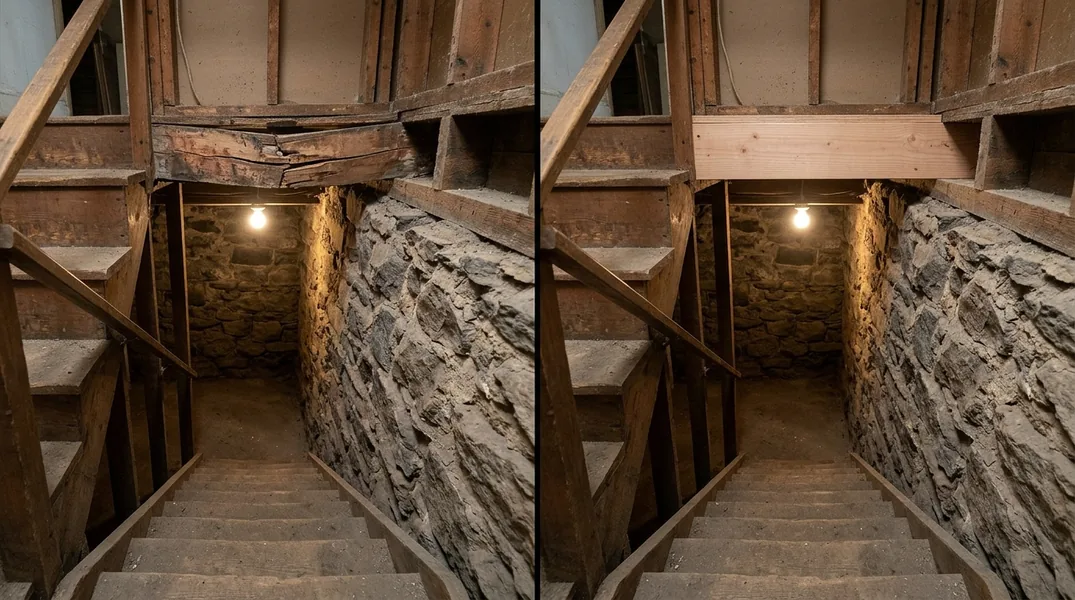
Why Is My Floor Sagging? Common Causes in Older Worcester Homes
If you own an older home in Worcester, a sagging floor isn't just an annoyance. It's a warning sign that something structural needs attention. The causes of floor sag vary, but understanding them is the first step toward fixing the problem before it becomes dangerous or astronomically expensive.
The most common culprit in aging homes is Wood Rot & Dry Rot Repair. When floor joists absorb moisture from basements, crawl spaces, or poor drainage, the wood fibers break down over time. This rot weakens the structural integrity of the joists, causing them to bow, crack, or collapse under the weight of your home. In Worcester's humid climate and older homes with poor ventilation, wood rot is particularly common in basement or first-floor joists.
Another significant cause is Termite Damage Repair needs. Termites tunnel through wood silently for years, hollowing out joists from the inside. By the time you notice a sagging floor, termites may have already compromised multiple support members. Settling and age also play roles. As homes age, wood naturally compresses and shifts. While minor settling is normal, excessive sagging indicates that foundation posts, beams, or joists have failed and need reinforcement or replacement.
Understanding Floor Joist Repair and Sistering Floor Joists
Floor Joist & Subfloor Repair is one of the most common solutions for sagging floors. Floor joists are the horizontal beams that support your floor and distribute weight to the foundation. When they weaken or fail, your floor sags. The good news is that damaged joists can often be repaired or reinforced without a complete replacement.
Sistering floor joists is a proven repair technique where a new or reinforced piece of lumber is fastened alongside a damaged or weakened joist. This process involves installing a sister joist that runs parallel to the original joist, creating a stronger, combined member. The sister joist is typically bolted or lag-screwed to the original joist at regular intervals along its length. This method is particularly effective for joists that are cracked, rotted, or sagging but still partially sound. The beauty of sistering is that it can often be done without removing the floor above, making it less invasive and disruptive than full joist replacement.
The process requires precision. A qualified carpenter will first assess the extent of damage, calculate the load-bearing requirements, and determine the correct size and grade of lumber needed for the sister joist. In some cases, hydraulic jacks are used to gradually lift the sagging floor back to its original level before the sister joist is permanently installed. This staged lifting prevents sudden structural shifts that could crack walls or damage plumbing and electrical systems.
When Beam Replacement Becomes Necessary
Not all sagging floor problems can be solved with sistering joists alone. When the main support beam under your home has failed, Beam Replacement & Load-Bearing Wall Removal may be required. Support beams are the primary structural members that carry the weight of your entire home. They sit on foundation posts and run the length or width of your basement or crawl space. When these beams rot, settle, or fail, the entire floor system above sags.
Beam replacement is a more complex and expensive undertaking than joist repair. It typically involves installing temporary support posts and beams to carry the load while the original beam is removed and a new one is installed. This process must be done carefully and in accordance with local building codes. Temporary support structures must be engineered to handle the full weight of your home, and the installation must be done by experienced professionals. The work may require building permits and inspections from your local building department.
Signs that you need beam replacement rather than just joist repair include severe sagging that affects a large area of your floor, multiple failed support posts, or visible rot, cracks, or bowing in the main beam itself. If you're experiencing significant floor sag, it's worth getting a professional assessment to determine whether sistering joists will solve the problem or if deeper structural work is needed.
Sagging Floor Repair Cost in Worcester: What to Budget
The cost of repairing a sagging floor varies widely depending on the cause, severity, and scope of the work needed. Understanding the factors that influence pricing will help you budget realistically and avoid sticker shock when you receive quotes.
For sistering floor joists, costs typically range from $1,500 to $5,000 per joist, depending on the length of the joist, the degree of damage, and whether the floor needs to be lifted. If you have multiple damaged joists in a small area, the total project might cost $3,000 to $8,000. If rot or termite damage has affected a large section of your floor system, costs can climb to $10,000 or more. Beam replacement is significantly more expensive, often ranging from $5,000 to $15,000 or higher, depending on the beam's length, the complexity of the installation, and whether temporary support structures are needed for an extended period.
Other factors that affect cost include accessibility. If your basement or crawl space is difficult to access, labor costs increase. The extent of damage also matters. If rot has spread to multiple joists and the subfloor, the repair becomes more involved. Finally, whether you need building permits and inspections will add to the project timeline and cost. In Worcester, most structural repairs of this magnitude require permits and inspections, which is actually a good thing because it ensures the work meets code and protects your home's safety and value.
Don't let cost concerns prevent you from addressing a sagging floor. Delaying repairs can cause the damage to worsen, leading to even higher costs down the road. Additionally, a sagging floor can affect your home's resale value and may create safety hazards. Contact Worcester Carpentry for a free estimate to understand the true scope and cost of your specific situation.
How to Know When to Call a Professional
Homeowners often wonder whether a sagging floor is something they can ignore or whether it requires professional attention. The answer is clear: any noticeable floor sag should be evaluated by a qualified carpenter or structural engineer. What seems like a minor cosmetic issue can indicate serious structural problems that will only worsen with time and use.
Warning signs that you need professional help immediately include floors that sag noticeably when you walk on them, visible cracks in joists or beams, a musty odor in your basement or crawl space (indicating moisture and potential rot), soft or spongy wood when you press on joists, or sagging that gets progressively worse. You should also have a professional inspect your floor if your home is over 50 years old and you've never had the foundation and floor system evaluated, or if you've noticed water intrusion, pest activity, or previous flood damage.
Worcester Carpentry specializes in diagnosing and repairing sagging floors and structural damage in older homes throughout the area. Our team has decades of experience identifying the root causes of floor sag and recommending the most cost-effective repair solutions. We'll inspect your home thoroughly, explain what we find in plain language, and provide a detailed estimate for the work needed. Call us today at (978) 440-1508 or visit our website to request a free estimate. Don't wait until a minor sag becomes a major structural failure.
Preventing Future Floor Sag: Maintenance Tips for Worcester Homeowners
Once you've repaired your sagging floor, taking steps to prevent future damage will protect your investment and keep your home safe. The primary cause of floor sag in older homes is moisture, so controlling moisture in your basement or crawl space is the most important preventive measure you can take.
Start by ensuring your gutters and downspouts direct water away from your foundation. Water pooling around your home's perimeter will eventually seep into the basement or crawl space, where it can soak into wood joists and beams. Check your gutters regularly, especially in fall when leaves accumulate. Make sure downspouts extend at least 4 to 6 feet away from your foundation. If you have a basement, install or maintain a sump pump and ensure your basement drainage system is functioning properly. In crawl spaces, install a vapor barrier on the ground and ensure adequate ventilation to prevent moisture buildup.
Regular inspections are also critical. Visit your basement or crawl space at least once or twice a year to look for signs of moisture, rot, pest activity, or structural changes. Catch problems early, before they compromise your floor system. If you notice any signs of damage, contact a professional promptly. Finally, maintain your home's exterior. Keep your roof in good condition to prevent leaks, caulk cracks in your foundation, and address any water intrusion issues immediately. These simple preventive steps can add years of life to your floor system and save you thousands in repair costs.
Looking for a professional carpentry contractor in Worcester? Worcester Carpentry responds fast for all your carpentry needs.
Get a Free QuoteOur services: Wood Rot & Dry Rot Repair · Termite Damage Repair · Floor Joist & Subfloor Repair