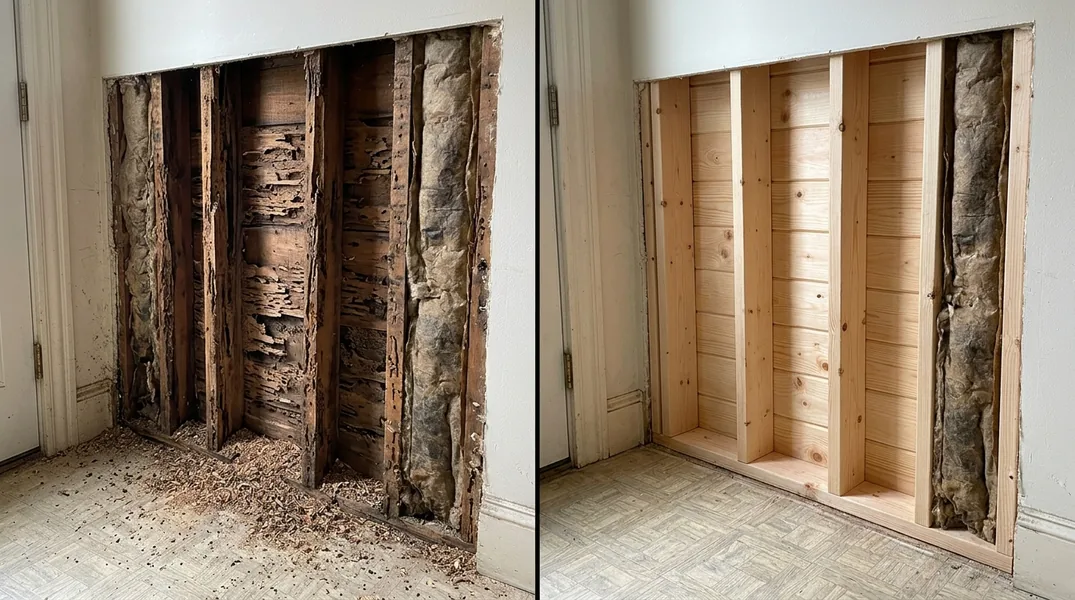
Understanding Ice Dam Damage vs. Dry Rot
New England winters are brutal, and Worcester homeowners face a unique challenge: distinguishing between ice dam damage and dry rot. Both can cause serious structural problems, yet they require completely different repair approaches. Confusing the two could lead you down an expensive and unnecessary repair path, or worse, leaving genuine damage unaddressed.
Ice dams form when warm air from your attic melts snow on the roof, causing water to back up under shingles and seep into your home. Dry rot, by contrast, is a fungal decay that eats away at wood fibers over months or years, typically in damp, poorly ventilated areas. Understanding which problem you're facing is the first step toward protecting your home and budget.
What Does Dry Rot Look Like? Key Visual Signs
Dry rot has distinctive characteristics that set it apart from water damage caused by ice dams. When you inspect your attic, fascia, or crawl spaces, look for wood that appears shrunken, darkened, or brittle. Affected wood often develops deep cracks running across the grain in a cube-like pattern. This cracking is one of the most reliable indicators of active dry rot. You may also notice a musty, earthy odor, which signals that fungal spores are actively colonizing the wood.
The wood affected by dry rot becomes extremely lightweight and can crumble when pressed with a screwdriver or awl. This is very different from wood damaged by ice dam water, which typically remains structurally intact but shows staining, swelling, or soft spots. If you press a tool into wood affected by dry rot, it will often sink in easily, leaving a depression. In Worcester homes, dry rot commonly appears in roof framing, rim joists, and basement sills where moisture accumulates. Professional inspection is essential because early-stage dry rot can be hidden behind paint or trim.
Recognizing Ice Dam Damage and Fascia Damage
Ice dam damage presents differently and often appears suddenly after a winter thaw. When ice dams form along your roofline, they trap meltwater that backs up under shingles and into your home. You'll typically see water stains on interior ceilings and walls, often appearing as brown or yellowish discoloration. The damage is usually concentrated near the eaves and gutters, and it happens relatively quickly once temperatures rise and ice dams release their water.
Fascia damage from ice dams is particularly common in Worcester homes. Your fascia board (the horizontal trim that runs along the edge of your roof) bears the brunt of ice dam pressure and water infiltration. Look for warping, paint peeling, visible rot, or separation from the roofline. Unlike dry rot, which develops slowly and deeply into wood fibers, ice dam damage to fascia often appears as surface deterioration, water staining, and localized soft spots. The damage is usually confined to the lower portions of the fascia board where water has pooled. If you notice your gutters pulling away from the house or sagging, this can indicate both ice dam damage and the structural stress it creates.
Wood Rot vs. Water Damage: How They Differ
Understanding the difference between wood rot and water damage is crucial for proper diagnosis and repair. Water damage from ice dams is often reversible if addressed quickly. When wood gets wet from ice dam infiltration, it can dry out and recover if ventilation improves and the moisture source is eliminated. However, if that wet wood is not dried properly, it creates the perfect environment for dry rot to develop. This is why ice dam damage can eventually lead to dry rot if left untreated.
Dry rot, on the other hand, represents permanent structural damage. The fungus that causes dry rot consumes the cellulose in wood, breaking down its structural integrity irreversibly. Once dry rot takes hold, the affected wood must be removed and replaced. You cannot simply dry out the wood and restore it. This is why early detection matters so much. A homeowner who catches ice dam water damage and addresses it immediately might avoid the costly process of Wood Rot & Dry Rot Repair, but someone who ignores water damage for months may eventually face extensive dry rot remediation.
When to Call a Professional for Inspection and Repair
If you suspect either ice dam damage or dry rot in your Worcester home, professional evaluation is essential. Attempting DIY diagnosis can be risky because these problems often overlap and hide in hard-to-reach areas. A trained carpenter can distinguish between the two, assess the extent of damage, and recommend the appropriate repair strategy. Worcester Carpentry specializes in identifying and repairing both conditions, and we understand the specific challenges that New England winters create for local homes.
Professional inspection typically involves examining your attic, fascia, gutters, roof line, and any areas showing visible water damage or staining. We'll use tools and techniques to probe wood and assess structural integrity. If dry rot is confirmed, we'll outline the scope of removal and replacement needed. If ice dam damage is the culprit, we'll discuss both immediate repairs and long-term prevention strategies, such as improved attic ventilation or heat tape installation. The cost of professional inspection is far less than the expense of replacing rotted structural members or dealing with water damage that spreads undetected.
Don't wait until structural problems become severe. Contact Worcester Carpentry today for a free estimate, or call us at (978) 440-1508 to schedule an inspection. Early intervention can save you thousands of dollars and protect your home's integrity.
Prevention: Protecting Your Worcester Home From Both Problems
The best approach to ice dam damage and dry rot is prevention. For ice dams, ensure your attic is properly ventilated and insulated. Heat loss through the roof is a primary cause of ice dams, so sealing air leaks and adding insulation can reduce the problem significantly. Keep gutters clean and consider installing heat tape or improving roof ventilation to allow trapped heat to escape. Many Worcester homeowners also benefit from professional gutter cleaning in fall and spring to ensure proper water drainage.
Preventing dry rot requires controlling moisture. Ensure your home has adequate ventilation in attics, crawl spaces, and basements. Fix any roof leaks or plumbing issues immediately. Install proper grading around your foundation so water drains away from the house. Use vapor barriers in crawl spaces, and consider a dehumidifier in damp areas. If you've experienced ice dam water infiltration, dry out affected areas thoroughly and monitor them for signs of fungal growth. Regular inspections, particularly in spring and fall, help catch problems early before they become costly.
Looking for a professional carpentry contractor in Worcester? Worcester Carpentry responds fast for all your carpentry needs.
Get a Free QuoteOur services: Wood Rot & Dry Rot Repair · Termite Damage Repair · Floor Joist & Subfloor Repair